Outside of my current employment, I am engaged in a variety of projects in my spare time. Click on the links to the right to navigate through the page.
Kowloon Walled City:
Perspectives into Late Colonial Hong Kong
During my undergraduate education, I engaged in an extended research project on Kowloon Walled City, a high-rise squatter settlement in late colonial Hong Kong. The project began as a first-year digital humanities project entitled “The Yamen: Identity and Place in the Kowloon Walled City” which borrowed heavily from existing academic and journalistic research on the Walled City, including the work of Seth Harter, Elizabeth Sinn, James Hayes, Emmy Lung, Greg Girard and Ian Lambot. During a half-year of academic exchange at the Chinese University of Hong Kong, I conducted archival and observational research and interviewed several individuals who had lived in or about the Walled City. My inquiry partially culminated in an Honors thesis in the Department of History (advised by Prof. Rebecca Nedostup) entitled “Extending and Remolding the State in the ‘Cancer’ of Hong Kong: The Clearance of Kowloon Walled City, 1987”.
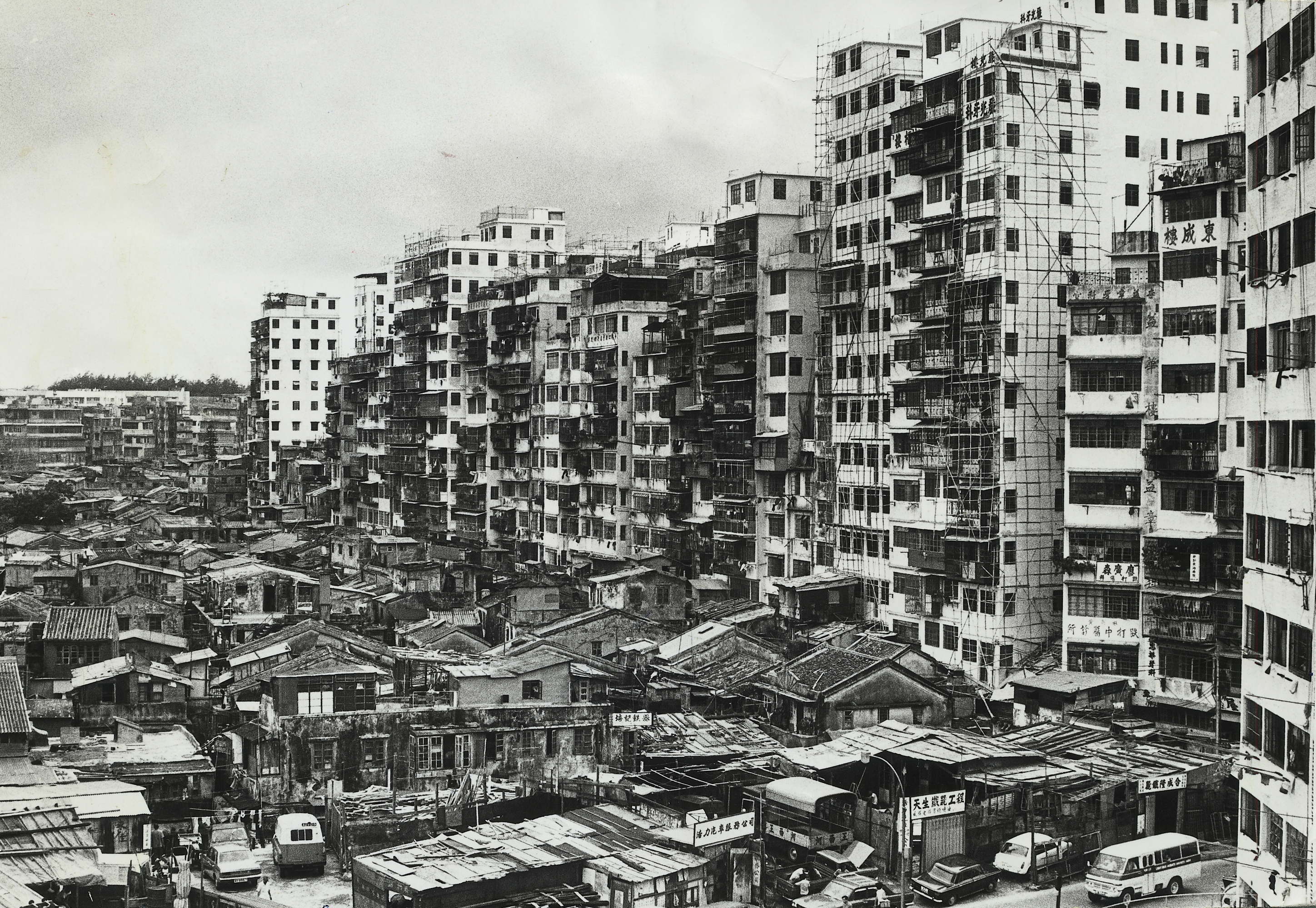
I am now working on converting the material of my Honors thesis into an academic journal article, which prospectively will argue that the clearance of Kowloon Walled City from 1987-1994 was an unprecedented and important event in the Hong Kong’s urban history and the Handover transition period. Using newspapers, memoirs and government archival materials, this article aims to outline the ways in which the Hong Kong colonial state had to adapt existing policy to render the settlement legible to state agents and craft a politically expedient compensation package by December 1987. Particular attention will be paid to the Special Committee on the Clearance of Kowloon Walled City (九龍城寨清拆事宜特別委員會), a unique body with majority Unofficial membership formed under the Housing Authority to determine policy on all matters related to the clearance.
Walled City-related records from earlier periods, particularly the 1950s and 1960s, will serve as the basis for an
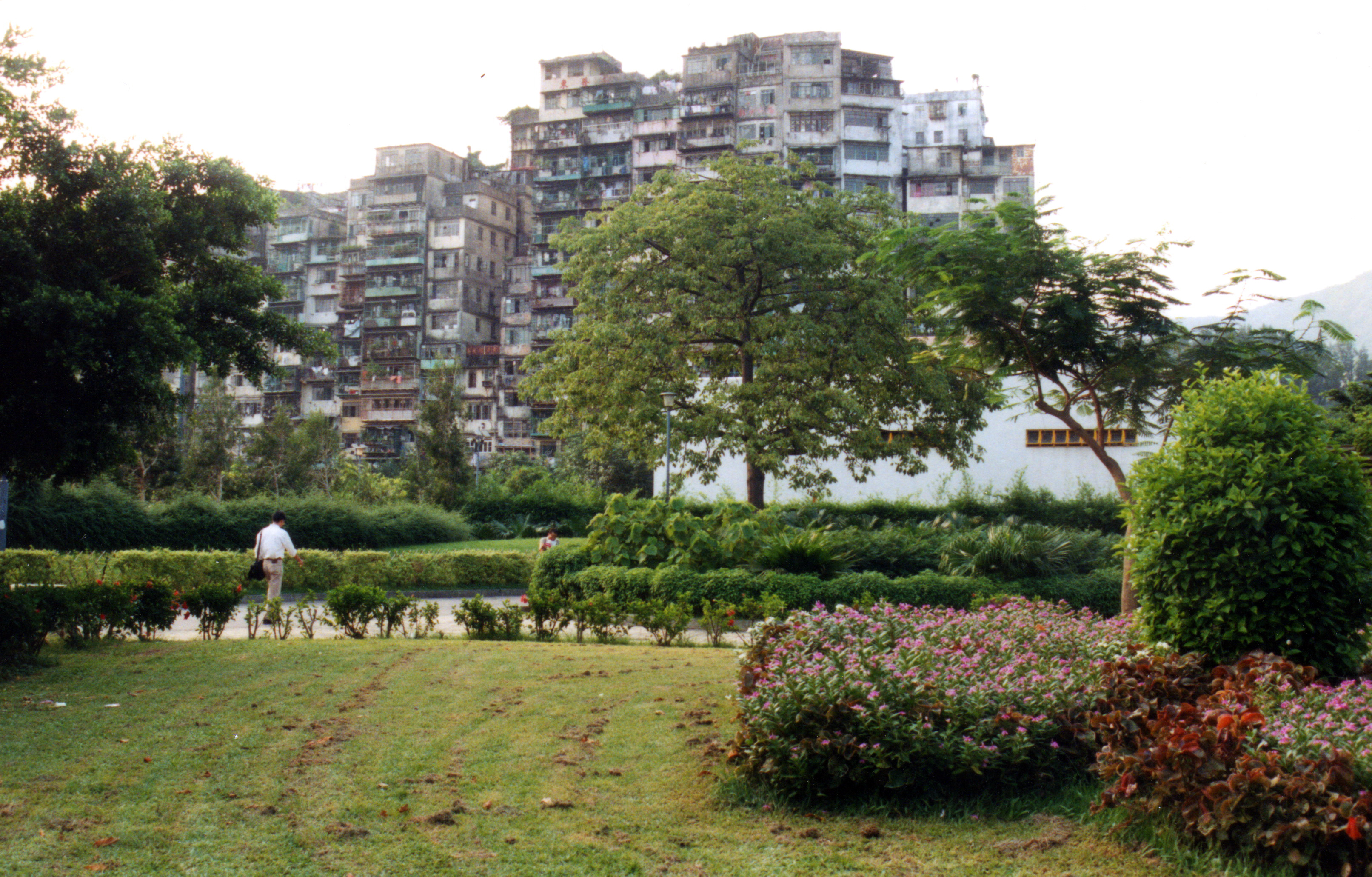
I am also revisiting archival records and community memoirs, and piecing through Emmy Lung’s interviews of Walled City residents, in the hopes of writing three additional articles. The first will be an investigation of the politics of water and electricity in the Walled City during the 1970s and 1980s, and how that mirrored the politics of water and electricity between the colony and the Chinese government throughout the postwar era. Using concepts from the anthropology of infrastructure and citizenship, the article will aim to show how notions of belonging and sovereignty laid at the heart of how Walled City residents and colonial officials grappled with the question of providing these utilities to the settlement.
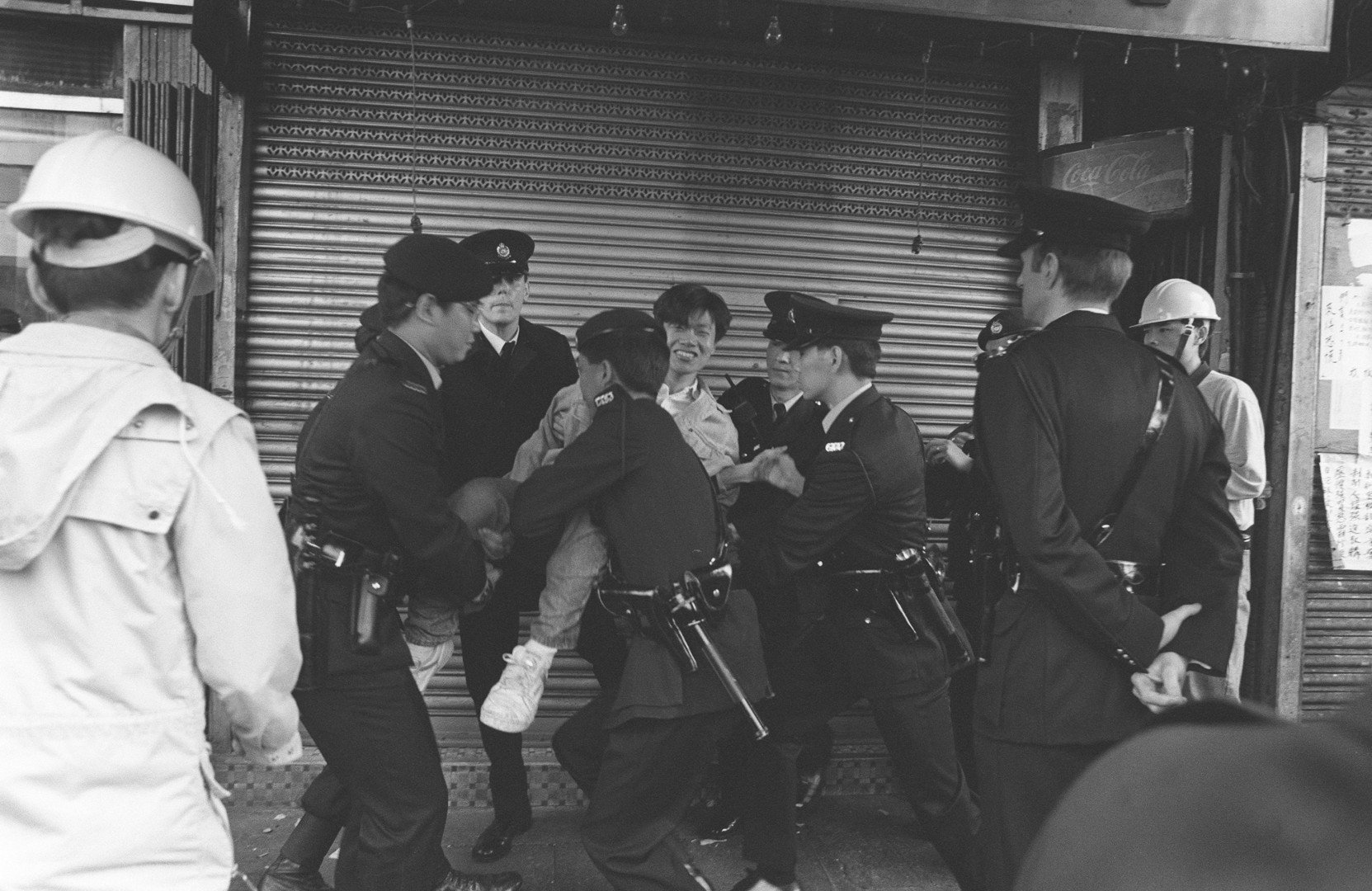
The second will be an examination of residents’ responses to the Walled City clearance in the context of wider concerns about the Handover of Hong Kong in 1997. Taking as its objects of analysis the numerous petitions, comments, and demonstrations made by Walled City residents and groups throughout the clearance process, the article prospectively will investigate the Handover as it was experienced through transition pains and political (re-)alignments wrought on the ground in events such as the Walled City clearance.
The third will be a historical account and close reading of the musical Tales of the Walled City (城寨風情, written by Raymond To 杜國威) during its first run in the early 1990s. The production saw the unprecedented collaboration of Hong Kong’s top three performance ensembles, and had such a successful theatrical run that it was revived twice in the decade to equally sold-out crowds. Through this reading, I aim to shed light on the growing use of the Walled City as a political metaphor in today’s Hong Kong by looking at how the Walled City was employed as a metaphor for the city’s Handover during the 1990s.
Future possible directions that I intend to develop include examining public debates and discourse about the Walled City in Hong Kong and the United Kingdom during the 1970s, the use of the Walled City as a metaphor in political writings in Hong Kong and around the world (ranging from William Gibson’s Disneyland with the Death Penalty to Jiang Shigong’s Kowloon Walled City and the University of Hong Kong 九龙城寨与香港大学), and the Walled City’s status as tourist attraction at the two extreme ends of the twentieth century.
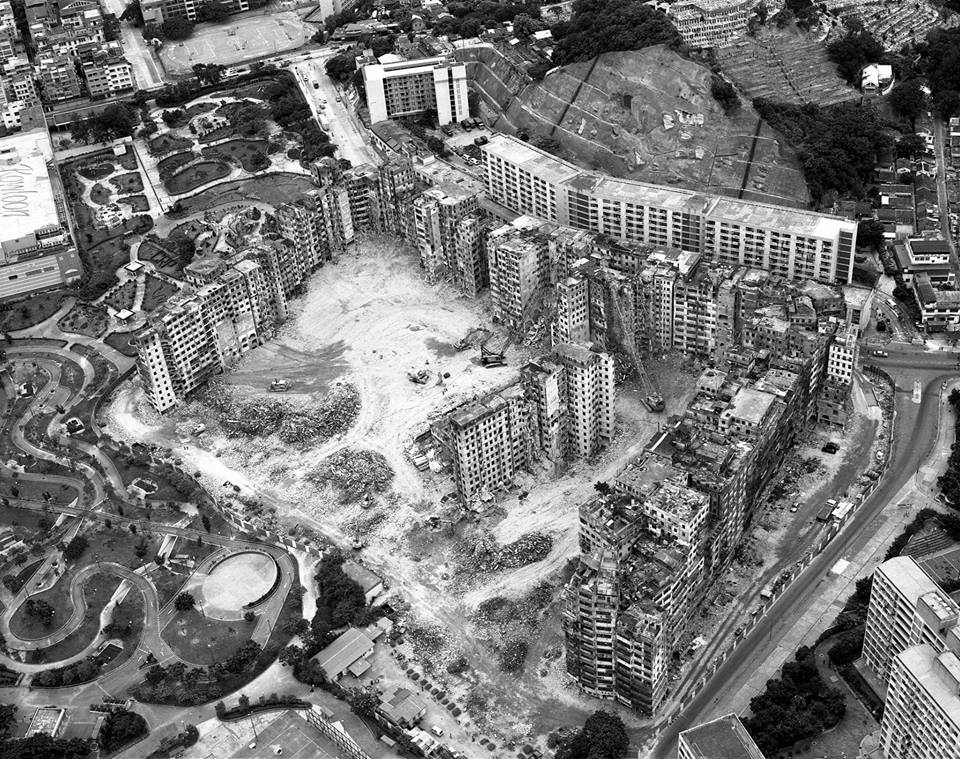
Finally, I am working on a digital humanities project using Scalar to exhibit a documentary history of Kowloon Walled City and the role that it played in postwar Hong Kong history. Prospectively entitled “Kowloon Walled City: Perspectives into Late Colonial Hong Kong”, the project aims to fill in a considerable gap in English-language and translated primary source compilations of Hong Kong history.
The Clearance of Kowloon Walled City:
A Role-Playing Game
A side-project born out of my thesis research was a role-playing simulation game which I crafted in conjunction with the team at Brown/RISD STEAM (Science, Technology, Engineering, Arts and Mathematics). Drawing on authentic materials and biographies, I crafted roles for game participants and designed a Dungeons-and-Dragons style narrative which challenged participants to embody both the goals and sentiments of their characters. The first simulation involved eight participants, and made me reflect deeply on the place of role-playing and simulation in history education. The way in which the game played out greatly influenced the interpretive focus and analytical tone of my thesis. I hope to create a more accessible, public version of the game and publish it in the hopes that it will help more people understand this portion of Hong Kong’s social history and its implications for the present day.
Reading the Revolution of Our Times:
Primary Sources in Translation of Hong Kong Political Thought
Tracking Inter-Asia Scholarly Conversations and Communities
Peacebuilding in the Sinophone
Pop Culture Asia
Writing and Translation
Podcasting and Videography
I am also currently hosting a podcast with my friend Brandon called The Twenties Generation, which aims to provide a platform for people in their twenties to talk about their unique perspectives and visions in the face of numerous challenges and crises, ranging from the COVID-19 pandemic to the existential threat of climate change, that this generation faces. In particular, the podcast strives to put youth from different parts of our world together in conversation, focusing mostly on those from different sides of the Pacific.
 Quinton Huang